
By William Marlowe | Staff Historian
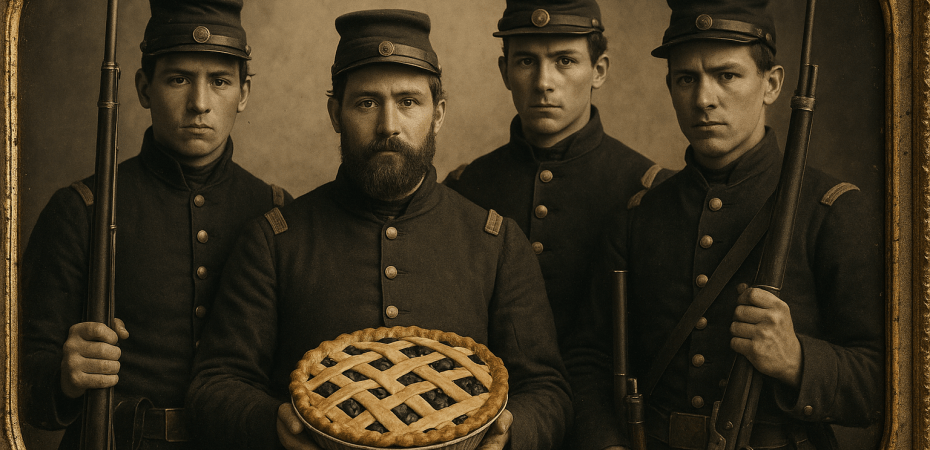
ROCKPORT — On this Memorial Day, while the rest of the country pauses to honor national heroes, Cape Ann solemnly commemorates its own forgotten struggle: the Rockport War of Independence, a brief but emotionally charged conflict in which the quiet village of Rockport declared independence from Gloucester in the summer of 1840.
Often overlooked in history books — largely because it was fought mostly with harsh language, baked goods, and one regrettable cannon shot into a stack of lobster traps — the war marked a turning point in the region’s identity and municipal boundary lines.
The Granite Rebellion
Tensions had simmered for years. Rockporters, tired of being referred to as “North Gloucester,” were frustrated with what they saw as excessive taxation, unequal allocation of fishing rights, and Gloucester’s refusal to recognize that Rockport Harbor was a real thing. Matters escalated when Gloucester levied a granite export duty without Rockport’s consent.
On June 28, 1840, a group of Rockport citizens gathered on Bearskin Neck and read aloud a hastily scrawled Declaration of Municipal Sovereignty. “We hereby remove ourselves from the tyrannical, crab-clawed grasp of Gloucester and form a new town, with separate fishing, zoning, and moral standards,” it read, “effective immediately after lunch.”
Gloucester, caught off guard, quickly mustered a regiment of surly harbormen and one very confused goat. The Battle of Five Corners — technically a loud shoving match followed by a long sulk — lasted just 43 minutes and concluded when both sides grew tired and decided to reschedule the fight until after dinner.
The Armistice at Whale’s Jaw
The Treaty of Whale’s Jaw, signed on neutral granite in Dogtown, formally ended hostilities. Terms included:
- Rockport would become its own town, provided it promised to maintain at least one general store and did not erect any buildings that would be a worldwide draw to painters and photographers (a clause later broken catastrophically)
- Gloucester retained access to Rockport beaches, so long as visitors promised to say “excuse me” before entering
- Annual softball games would be held to “exhaust any lingering aggression”
To this day, the two towns maintain an uneasy but affectionate truce, united in their love of seafood and mutual disdain for outsiders who think they’re “basically the same place.”
Honoring the Fallen (and Slightly Bruised)
This Memorial Day, wreaths were laid at Rockport’s solemn Memorial Rock, which bears the names of those who served in the War of Independence, including:
- Capt. Elmer J. Babson, who led the assault on Good Harbor Beach
- Lt. Prudence “Pru” Wibberley, who threw a blueberry pie at a Gloucester town councilor with alarming accuracy
- Private Carl Wonson, who sprained his ankle tripping over a stray dog while fleeing
In a gesture of unity, a delegation from Gloucester arrived with an offering of a case of Four Loko and a modest box of Market Basket whoopie pies.
“They may have broken away,” said Gloucester resident Peter Stone, “but they still come to our side of the line to buy liquor.”
As bagpipers wailed and gulls cried overhead, residents young and old gathered to remember not just the brave souls who fought and tripped and argued in that fateful conflict, but the enduring power of local government to turn anything into local legend.
Support Massachusetts veterans and Gold Star families — https://www.massfallenheroes.org/
 The Dogtown Reader