
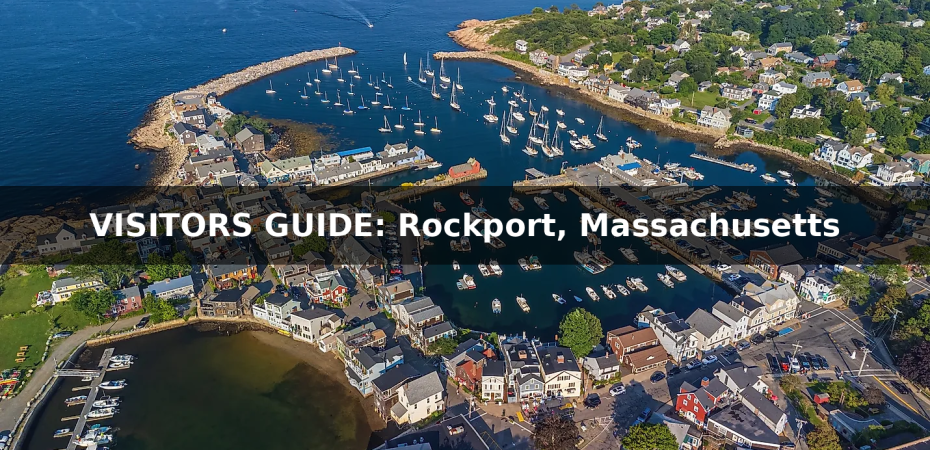
By Julie Ann Funkenstein | Lifestyle Editor
Welcome to Rockport, Massachusetts, a town so old and charming that it makes other New England towns feel like they should try harder. It’s a place where the water is wet, the people are dry, and everyone goes to bed by 7:00 in the evening.
The Origins of Rockport
Rockport has a rich and fascinating history, which, like most places on the east coast of America, mostly involves British people turning up, planting a flag in some sand, and declaring the whole area “an important bit of England” while completely ignoring the people who already lived there.
Rockport was founded in the early 1600s by a group of settlers who were tired of living in places without rocks or ports. According to local legend, the town was originally called “Middlingly Craggy Bay” but was later renamed “Rockport” after someone pointed out that it had both rocks and a port. The name was considered radical at the time, as most towns were named after people who had enough money to get their names on maps.
Motif No. 1 – America’s Most Photographed Red Thing
Rockport’s biggest claim to fame is Motif No. 1, a red fishing shack that has been painted, photographed, and sketched more times than the Mona Lisa, except it’s significantly less smiley and significantly more fishy.
The original Motif No. 1 was built in 1884 as a way to store nets, buoys, and the occasional disgraced lobster. It was accidentally destroyed in the Great Blustery Day of 1921 when it was blown into the harbor by a particularly ambitious gust of wind. The current structure is a replica, which means that every photograph taken of it is technically a lie.
It’s known as “the most-painted building in America” because it is painted red, and also because artists can’t resist the urge to capture its rustic, slightly damp charm. It has appeared on postcards, calendars, and even the cover of the 1995 “New England’s Dampest Sheds” coffee table book.
Bearskin Neck – Named for a Bear or a Guy Named Bear or a Neck, Probably
Bearskin Neck is the narrow strip of land that juts out into Rockport Harbor, lined with shops, galleries, and restaurants. The origin of its name is the subject of much local speculation. Some say it’s because an early settler once skinned a bear there, while others claim it’s named after a pirate who wore a bearskin coat and had a particularly large neck.
Visitors are encouraged to walk the length of Bearskin Neck to visit the unique shops, stopping at the end of the Neck to take in the views of Rockport Harbor, the Atlantic Ocean, and the pile of rocks that locals ambitiously refer to as a breakwater.
Rockport’s Cultural Contributions – How Dry I Am
Despite its small size, Rockport has had a surprising influence on American culture. For example, it was the first town in the United States to ban alcohol in 1856, after a woman named Hannah and 200 other women stole all the alcohol in town, got extremely drunk, and jumped into the harbor. That’s why she’s known today as “Hannah Jumper.” But prospective tourists needn’t worry – as a “moist” town rather than a “dry” town since 2005, beer and wine are now available in Rockport restaurants.
The Shalin Liu – Surprisingly Foreign Sounding
Rockport Music’s Shalin Liu Performance Center is one of the town’s most iconic landmarks, a world-class concert hall known for its stunning ocean views and acoustics so perfect that even the ghosts of sea captains trapped in the walls refuse to moan off-key.
Built on the site of what locals insist was either a lobster pound or a haunted shoe factory, the Shalin Liu offers audiences the unique experience of watching live performances while being occasionally distracted by the sight of a confused seal or a particularly ambitious seagull trying to steal a sandwich from a passing kayaker. Its massive oceanfront window is said to have been designed to distract musicians just enough to keep ticket prices reasonable.
Rockport – Paintings of Boats That All Look Suspiciously Like the Same Boat
Today, Rockport is a popular tourist destination, known for its art, seafood, and locals who pride themselves on being fiercely independent, stubborn, and completely unwilling to accept credit cards that were issued after 1992.
The town itself is small and quaint, with narrow streets lined with adorable little shops. Like many seaside New England towns, Rockport’s economy is based on three main industries: selling overpriced art to tourists, selling overpriced lobster to tourists, and selling overpriced lobster art to tourists. It’s the kind of place where you can spend $14 on a blueberry muffin and walk away feeling like you’ve really experienced something authentic.
 The Dogtown Reader