
By J.B. Fitzsimmons | Gloucester Correspondent
GLOUCESTER — In what’s being described as “a shocking development in local memory,” volunteers at the Cape Ann Amateur Historical Society this week uncovered evidence that Black residents lived in Gloucester well before 1990 — contrary to popular assumptions based on vague recollections and “that one guy who worked at the post office.”
The revelation came during a seasonal “Juneteenth Curiosity Audit,” in which the Society’s unpaid interns were instructed to find “any non-fishing-related diversity” in the archives. To their astonishment, they stumbled upon 19th-century records of Black families in the city, veterans in the Civil War, and community leaders from as far back as the 1700s.
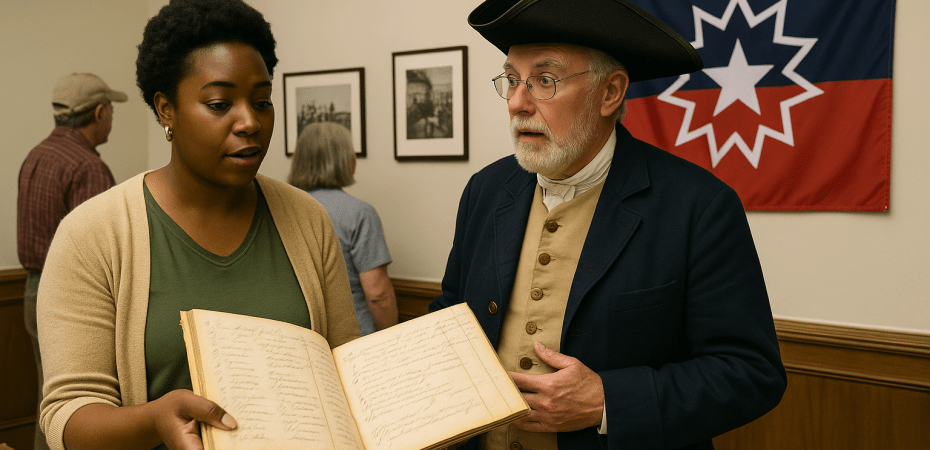
“We were mostly just looking for a reason to update the diversity section of the gift shop,” said Society board member, president, treasurer, archivist, and designated flag folder Rich White, slowly thumbing through a faded registry. “Turns out there were actual people here with land, jobs, and dignity.”
At the center of the newly rediscovered narrative is the Freeman family, whose patriarch bought his freedom from slavery in 1769 and settled in what is now the Wellspring House on Essex Avenue. His descendants became farmers, landowners, and — in one case — Salem’s first Black police officer.
The Wellspring property is now home to History Lives Here, a permanent exhibit curated by Wellspring staff and researchers who apparently just asked more questions than the Historical Society did in the past 150 years.
The discovery has thrown the Society’s previous Black History timeline — which included “that jazz concert at the UU church,” “Obama,” and “one memorable Kwanzaa event at City Hall” — into disarray.
“We figured the first Black person in Gloucester was that guy who moved here from Dorchester in the early 90s,” said White. “You know the one. Wore that hat. Real polite. We all liked him.”
When pressed for details, White conceded that their previous understanding of Black history on Cape Ann was “a little fuzzy” and based on a mixture of hearsay, misattributed ship logs, and “a folk song we now suspect was made up at The Rhumb Line open mic.”
The Society has since announced a new public exhibit tentatively titled Yes, They Were Here: Black Gloucester Before Your Cousin Mike Noticed, which will feature primary documents, restored photographs, oral histories, and a map of places that used to be different places.
“Apparently,” said White, adjusting his tri-corner hat with new reverence, “Black history isn’t just something that happened in Boston or on PBS. Some of it happened right here. Wild.”
Wellspring House representatives declined to comment, except to note they are “glad people are finally catching up.”
 The Dogtown Reader